Cervical Dystonia Physiotherapy
What is cervical dystonia?
What is cervical dystonia?
Cervical dystonia (or spasmodic torticollis) is a painful neurological condition that causes involuntary contractions of muscles in the neck. This results in abnormal neck movements and postures (e.g., head tilting forward or backward). These movements or postures may come and go or last for a long time (chronic). Cervical dystonia is different for everyone. For a lot of people, it can be debilitating and severely affect their quality of life.
Symptoms of cervical dystonia
The symptoms of cervical dystonia vary in frequency and severity and usually develop gradually.
The most common symptoms are neck muscle contractions which cause the neck to move in and out of or stay in an abnormal posture.
Abnormal neck movements/postures include:
• Torticollis (most common): Head turns to the side
• Later Collis: Head tilts to the side
• Antero Collis: Head tilts forwards
• Retro Collis: Head tilts backward
Other symptoms include:
• Neck pain that radiates to the shoulder
• Headache
• Fatigue
• Insomnia
• Anxiety
• Depression
Dystonia causes
Scientists aren’t sure what causes cervical dystonia. In some cases, there is a family history of the condition (e.g., a close relative has cervical dystonia). Recently, researchers from the University of Tennessee have discovered several gene mutations that could be associated with cervical dystonia (LeDoux et al., 2016). In other cases, cervical dystonia could be the result of a prior head or neck injury (Samii et al., 2000).
Treatments
Who can get cervical dystonia?
Can cervical dystonia be cured?
Cervical dystonia treatments
The Study
The study included 72 patients suffering from cervical dystonia. The patient’s symptoms included pain, muscle contractions, and abnormal neck movements and postures. Additionally, several patients were anxious and/or depressed.
All of the patients’ symptoms included muscle contractions and abnormal neck movements or postures.
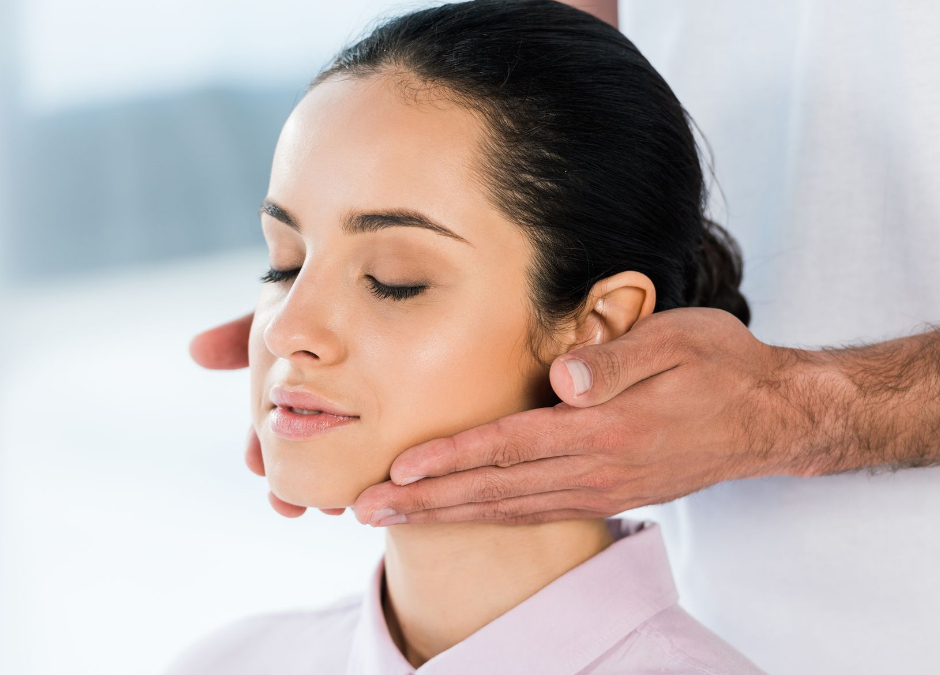
All participants underwent weekly physiotherapy sessions for 12 weeks. Physiotherapy treatments included neck massage, stretching, and exercises.
Immediately after 12 weeks, 6 months later, and one year later, the researchers followed up with the patients. They found that there was a significant improvement in all symptoms at each follow-up appointment.
The results of this study suggest that physiotherapy by itself is an effective treatment for cervical dystonia.
References
Defazio, G., Jankovic, J., Giel, J. L., & Papapetropoulos, S. (2013). Descriptive epidemiology of cervical dystonia. Tremor and other hyperkinetic movements (New York, N.Y.), 3, tre-03-193-4374-2. https://doi.org/10.7916/D80C4TGJ
LeDoux, M. S., Vemula, S. R., Xiao, J., Thompson, M. M., Perlmutter, J. S., Wright, L. J., Jinnah, H. A., Rosen, A. R., Hedera, P., Comella, C. L., Weissbach, A., Junker, J., Jankovic, J., Barbano, R. L., Reich, S. G., Rodriguez, R. L., Berman, B. D., Chouinard, S., Severt, L., Agarwal, P., … Stover, N. P. (2016). Clinical and genetic features of cervical dystonia in a large multicenter cohort. Neurology. Genetics, 2(3), e69. https://doi.org/10.1212/NXG.0000000000000069
Norris, S. A., Jinnah, H. A., Espay, A. J., Klein, C., Brüggemann, N., Barbano, R. L., Malaty, I. A., Rodriguez, R. L., Vidailhet, M., Roze, E., Reich, S. G., Berman, B. D., LeDoux, M. S., Richardson, S. P., Agarwal, P., Mari, Z., Ondo, W. G., Shih, L. C., Fox, S. H., Berardelli, A., … Perlmutter, J. S. (2016). Clinical and demographic characteristics related to onset site and spread of cervical dystonia. Movement disorders : official journal of the Movement Disorder Society, 31(12), 1874–1882. https://doi.org/10.1002/mds.26817
Samii, A., Pal, P. K., Schulzer, M., Mak, E., & Tsui, J. K. (2000). Post-traumatic cervical dystonia: a distinct entity?. The Canadian journal of neurological sciences. Le journal canadien des sciences neurologiques, 27(1), 55–59. https://doi.org/10.1017/s0317167100051982
Van den Dool, J., Visser, B., Koelman, J. H., Engelbert, R. H., & Tijssen, M. A. (2019). Long-Term Specialized Physical Therapy in Cervical Dystonia: Outcomes of a Randomized Controlled Trial. Archives of physical medicine and rehabilitation, 100(8), 1417–1425. https://doi-org.ezproxy.library.yorku.ca/10.1016/j.apmr.2019.01.013